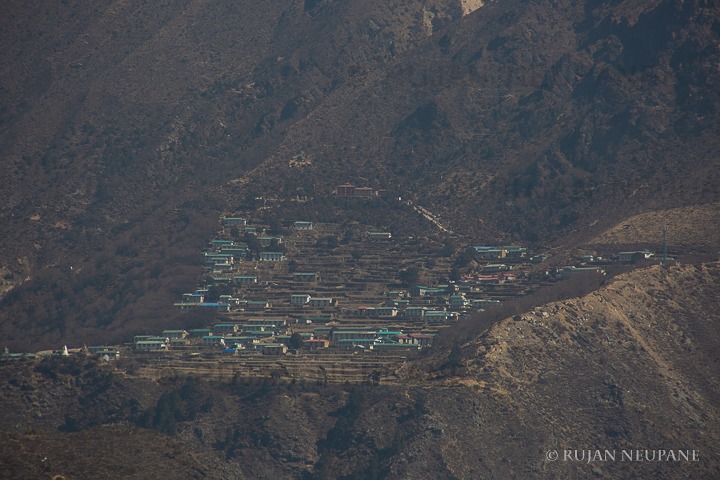
From the busy trail between Namche Bazaar and Tengboche, look across the deep valley of the Dudh Koshi and you will see it: a village spread over a long, open slope, high above the river. That is Phortse, and very few trekkers ever cross over to it.
A village living its own life. Phortse is a farming village first. Stone walls divide the potato fields, families work outside, and the old houses keep their ancient wooden windows and carved woodwork, dark from years of smoke and mountain weather. In the middle of the village lies a wide, flat ground the villagers use for football, and at the far end stands an old white stupa under prayer flags.
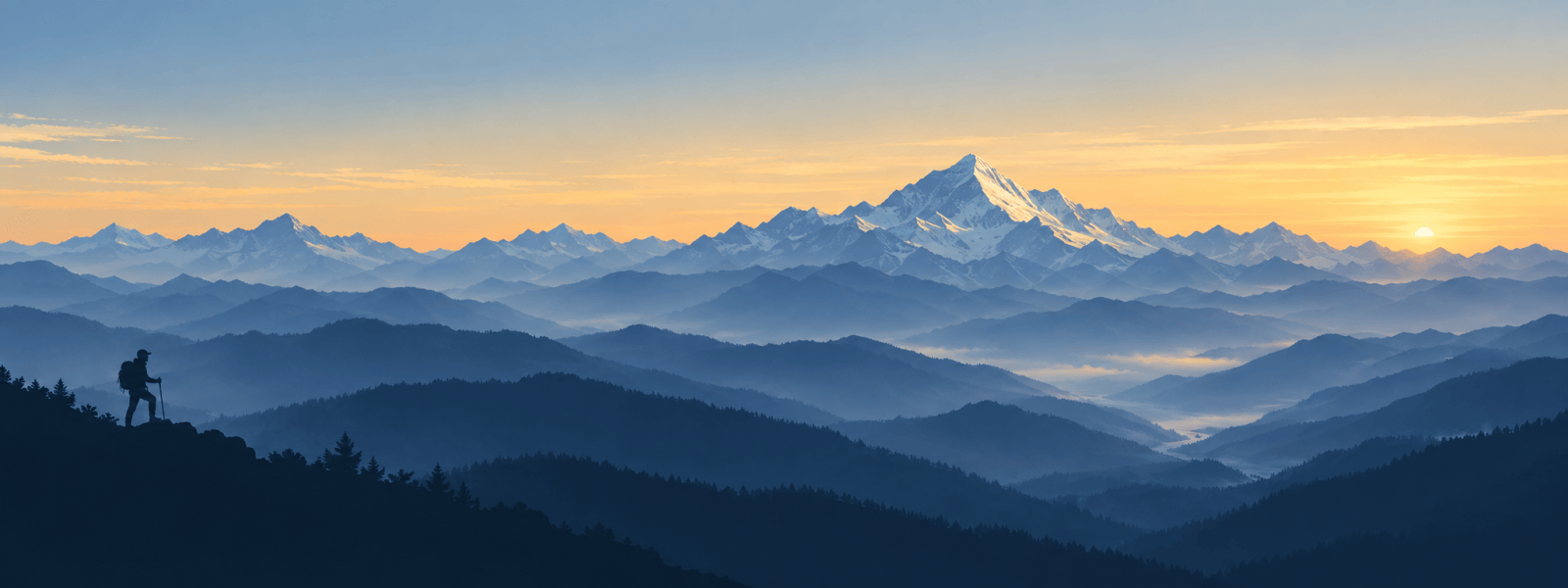
Facing two worlds. On one side, Ama Dablam rises straight above the valley. On the other, the trail leads north towards the Gokyo valley, and on a clear day you can see the far summit of Cho Oyu. Standing in Phortse, you feel both: the famous mountains of the Base Camp trail, and the wider, quieter land of Gokyo.
My two nights here. On my last Everest walk, we stayed two nights in a lodge at the top of the village, with the whole of Phortse below our window. The first evening, the sun lit Ama Dablam just before dark, and I took the photograph I love most from that whole trek. The next day was grey, so we walked a little way along the trail towards Gokyo and back, and spent the evening in a warm dining room decorated in the Tibetan style, sharing stories with another group and their guide, a friend of mine.
How to include it. Phortse fits well as an extra day or two on the Everest Base Camp walk: on the way up, as a quiet night of acclimatisation, or on the way down, as a rest from the main trail. From Khumjung, the path climbs over the Mong La pass, drops to the river at Phortse Tenga, and climbs again to the village. From Phortse, a high trail continues across the valley to Pangboche.
Read my full story from Phortse: Phortse: The Village Across the Valley.
Rules change. If something here is out of date, please tell me and I will correct it.Tell me