Chitwan Jungle Safari
About
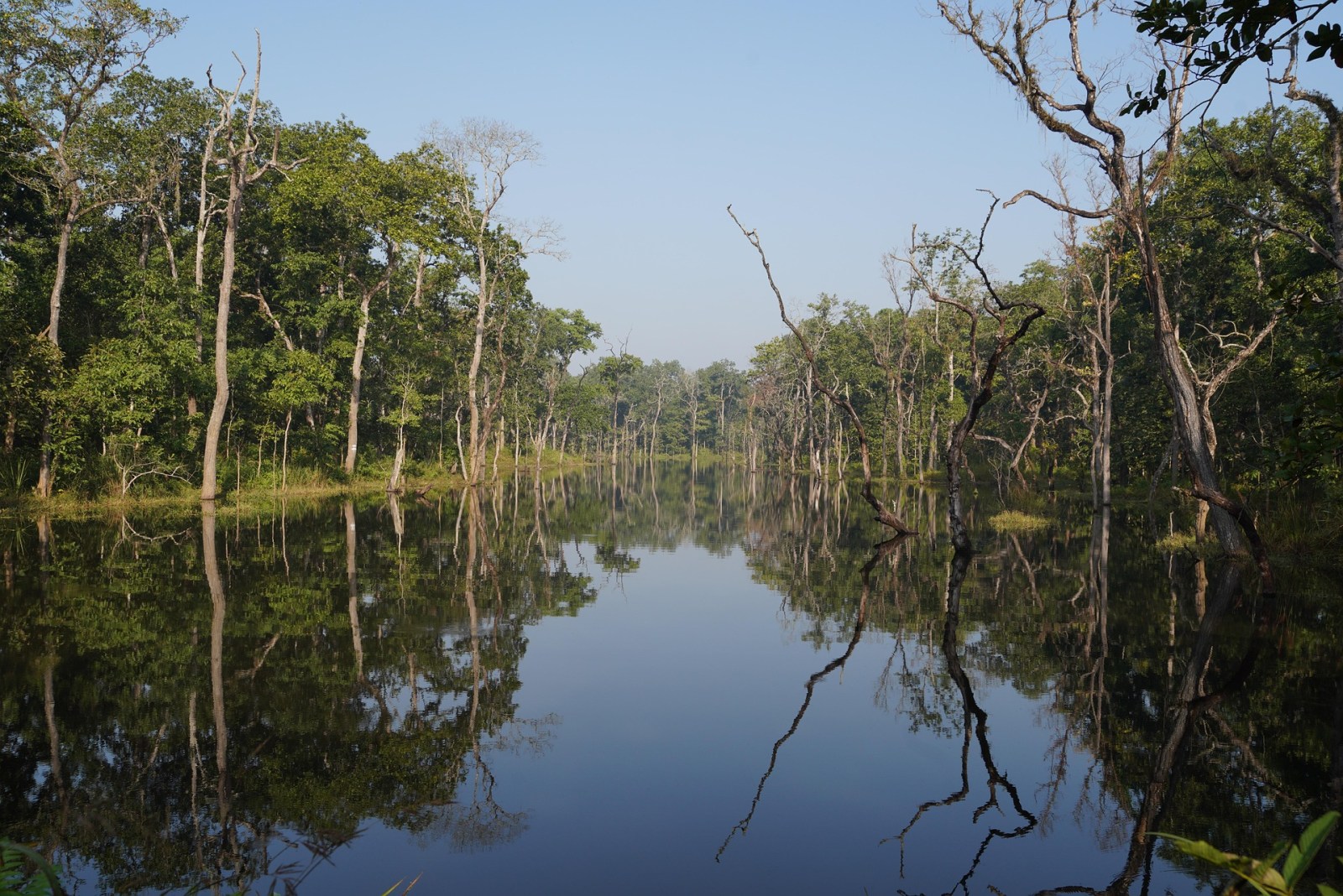
Three days in the warm, flat south of Nepal, where the hills end and the jungle begins. We stay by the Rapti river in Sauraha, at the edge of Chitwan National Park. Mornings are for the canoe and the birds, afternoons for the jeep safari among the rhinos, and evenings for sitting by the river while the forest goes quiet. After the mountains, it feels like another country.
A private tour
A few days that belong to you
Namaste, and welcome. Just your group, your own car and me. You wake in a quiet guest house, walk when the light is good, and rest when you want to. Nobody hurries you to the next stop on someone else's timetable. For these few days, the road is yours.
- Your own car and driver
- It stops for a view, a tea shop or a photo whenever you ask.
- Mornings without an alarm
- Sunrise if you want it, a slow breakfast if you do not.
- One person to ask
- The same guide all the way: for the history, the food, the road and anything that goes wrong.
- Quiet places to sleep
- Small guest houses, chosen for calm rather than size.
- The plan bends to you
- A place left out, a longer stay, a slower day: we decide together as we go.
 With warmth, Rujan Neupane
From my own tours
I spend most of my life among mountains and hills, so every time I drive down to Chitwan it feels like arriving in another country. The road leaves the cold behind, the hills open, and suddenly the land is flat and green and warm. I always think how lucky we are in Nepal to have the Himalaya, the hills and the Terai, all in one small country.
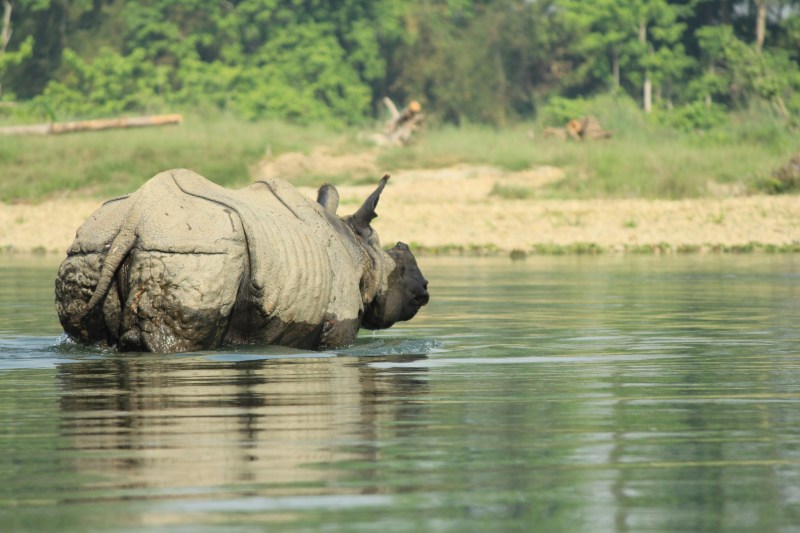
The jeep safari in Chitwan National Park is an experience of its own. You sit quietly in the tall grass, and then a rhino lifts its head and looks at you. Sometimes it is elephants. With my camera in my hand, I forget the heat completely, until the evening, when a cold beer by the river in that heat feels like the best thing in the world.
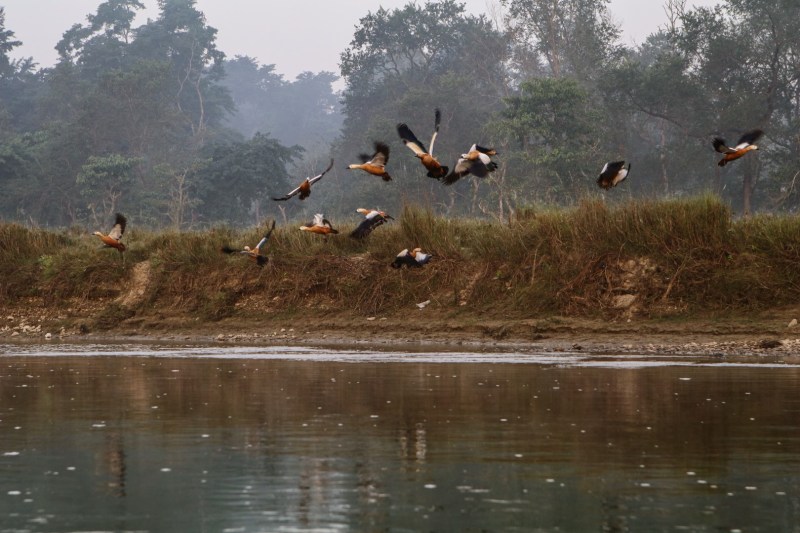
What stays with me most are the sounds. In the lodge, the call of the hornbill, the bird with the long beak, comes right into the room. In the morning we take the canoe on the river, slowly, with the birds all around us and the crocodiles lying still on the banks.
In winter, when the fog lies over the plains, the sun rises from the ground itself, round and soft through the mist. I have photographed many sunrises on Himalayan peaks, where the first light touches the very top of the mountain. In Chitwan it is completely different, and just as beautiful.
From my last tour
Along the way
What this day is known for.
- A jeep safari through sal forest and grassland
- Hornbills, kingfishers and hundreds of other birds
- Winter mornings when the sun rises out of the fog over flat land
Day by day, night by night
Where we go, how long on the road, and where you sleep each night.| Day | The day | On the road | The night | Room + meals |
|---|---|---|---|---|
| Day 1 | Kathmandu to ChitwanDown from the hills along the Trishuli river to the warm plains. Afternoon walk to the Rapti riverbank for sunset.
|
About 5 to 6 hours | Sauraha, a family-run lodge or City Luxury Hotel | — |
| Day 2 | A day in the parkEarly canoe on the Rapti in the morning mist, then a short walk in the forest with the park’s nature guides. Rest through the heat. Jeep safari into the grassland in the afternoon.
|
Sauraha, a family-run lodge or Luxury Hotel | — | |
| Day 3 | Sunrise and back to KathmanduBirds by the river at sunrise, breakfast, then the road back up into the hills.
|
About 5 to 6 hours | — |
Is this tour for you?
Walking, steps, heat and access, honestly.Not sure? Tell me who is coming, and I'll tell you honestly. Write to me
The honest downsides
What I'd want to know before booking.- The road is long and slow, with traffic and road works on the way.
- From April to June the heat is strong, and the middle of the day is hard.
- The animals are wild. Rhinos are very likely; a tiger is rare, and nobody can promise one.
- Sauraha is busy near the river in high season.
- Mosquitoes in the evening, and leeches in the monsoon.
Photos from this tour





More about this tour
Best time to go
Kathmandu works all year. What changes is the light, the heat and the crowds.- GoodJAN
- GoodFEB
- GoodMAR
- HazyAPR
- HazyMAY
- RainJUN
- RainJUL
- RainAUG
- GoodSEP
- BestOCT
- BestNOV
- GoodDEC
Best from October to March. Hot before the monsoon, green and wet during it. A few words under the months: In December and January thick fog lies over the plains in the morning. It is cold and slow, but the light is beautiful when the sun breaks through. From late January, after local people cut the tall grass, animals are easier
Time of day
Festivals worth planning for
Festival dates follow the lunar calendar and change every year; I confirm the date when you ask.
Before you go
The small practical things.Visiting with respect
These are living places of worship, not museums.- Speak softly in the jeep and the canoe; the forest listens.
- Stay in the jeep unless the nature guide says otherwise.
- Keep your distance from rhinos and elephants, and follow the nature guides.
- Never feed the animals, and take all plastic back out of the park.
- Nobody walks in the park between sunset and sunrise. It is the park's rule.
- Ask before photographing people and homes in Tharu villages.
Staying away: 2 nights
You pay me only my guide fee. Rooms and meals are paid at what they actually cost, with nothing added by me.Where your money goes
Every amount, and who receives it. I charge only my guide fee; the rest is paid at cost.| What | Who receives it | Amount | Note |
|---|---|---|---|
| Guide fee | Rujan Neupane | $30 a day | For your whole private group |
| Park entry | Chitwan National Park, at the gate | NPR 2,000 | Foreigners. SAARC: NPR 1,000. Nepali: NPR 150 |
| Jeep safari, canoe and nature guides | Local partners in Sauraha | Agreed before we book | Paid to the people who do the work |
| The road | Tourist bus or private van | Agreed before we book | Or a flight to Bharatpur |
| Lodge and meals | The family who runs the lodge | At their price | Nothing added |
| Thank you | Me and the nature guides | Your choice | Welcome, never expected |
I don't sell packages. I guide, and I help you arrange the rest (rooms, transport, permits) at what it actually costs. If you would like it all put together as one package, ask me: I make one only on your request, and we confirm it by email.
Photo notes
From a guide who is also a photographer.The places in detail
The history and stories behind what you will see.Chitwan is a different Nepal. A day’s drive south of Kathmandu, the hills fall away into the warm, flat Terai, and the Chitwan National Park begins at the edge of the Rapti river. It is a UNESCO World Heritage site of sal forest and tall grassland, home to one-horned rhinos, crocodiles, deer, wild elephants and hundreds of kinds of birds.
We spend two nights in Sauraha, by the river. Mornings are for the canoe and the birds, and afternoons for the jeep safari into the grassland. In the evenings we sit by the river and listen. It is three slow days, and the animals keep their own hours, so we follow them.
My promises
Written down, so you can hold me to them.- No pressureAsk me anything. Asking costs nothing and commits you to nothing, and I will never rush your decision.
- Nothing hiddenEvery cost is written down before you pay anything, and nothing is added later without your agreement.
- Your day, your paceWe stay longer where you want to, and skip what doesn't interest you.
- Reviews as writtenEvery review here is published as the guest wrote it. I don't edit reviews or remove critical ones.
Before you go
What I would read first, from my own guides and tours.Guides to read first
Frequently asked questions
Will we see a tiger?
Probably not. Tigers live in Chitwan, but they are shy and rarely seen. Rhinos, deer, crocodiles and birds you will almost certainly see.
Is it safe?
Yes, if we follow the nature guides. Rhinos and wild elephants are powerful animals, so we keep our distance and listen to the people who know this forest best.
Who guides us inside the park?
The jeep safari, the canoe and the forest walk go with Chitwan’s own licensed nature guides. I come with you the whole way and look after everything else.
Can we fly instead of driving?
Yes. There is a short flight from Kathmandu to Bharatpur, then under an hour by road to Sauraha.
Can we add a night?
Yes: a full-day jeep safari deeper into the park, or a quiet morning just for birds.
Can I combine Chitwan with Pokhara or a trek?
Yes. The road from Chitwan to Pokhara takes about 5 to 6 hours, so Chitwan fits well before or after a walk.
Reviews from guests who toured with me are published automatically, exactly as they wrote them. Reviews sent through the open form are checked for spam only.
Reviews
0 reviewsNo reviews yet. Be the first to share how your tour went.
Share your experience
Took this tour with me? Your review is held for a quick check before it's shown here.
Plan it with me
Tell me how you'd like to spend the day. I'll plan the rest around you.
Send your date, group size and anything you'd like to see or skip, whichever way suits you.
- +977 984-3808583
- Phone
- +977 984-3808583
Know your date already? Book me as your guide for this tour
More than 5 of you? Write to me. I guide up to 5 people at one rate. For a bigger group we can talk it through by email. I reply myself, usually within a day. On the trail there is often no network, so it can take a few days.
Verified credentials
My licences and training papers. Open any file to see the original.
Guide Association Membership
Thank you.
Your review of Chitwan Jungle Safari Tour means a lot — I read every one myself.
Held for a quick check — it'll appear on this page once approved, usually within a day.
Write to me about this tour
Enquiring about: Chitwan Jungle Safari Tour — tell me your dates and group size and I'll reply with availability and next steps.