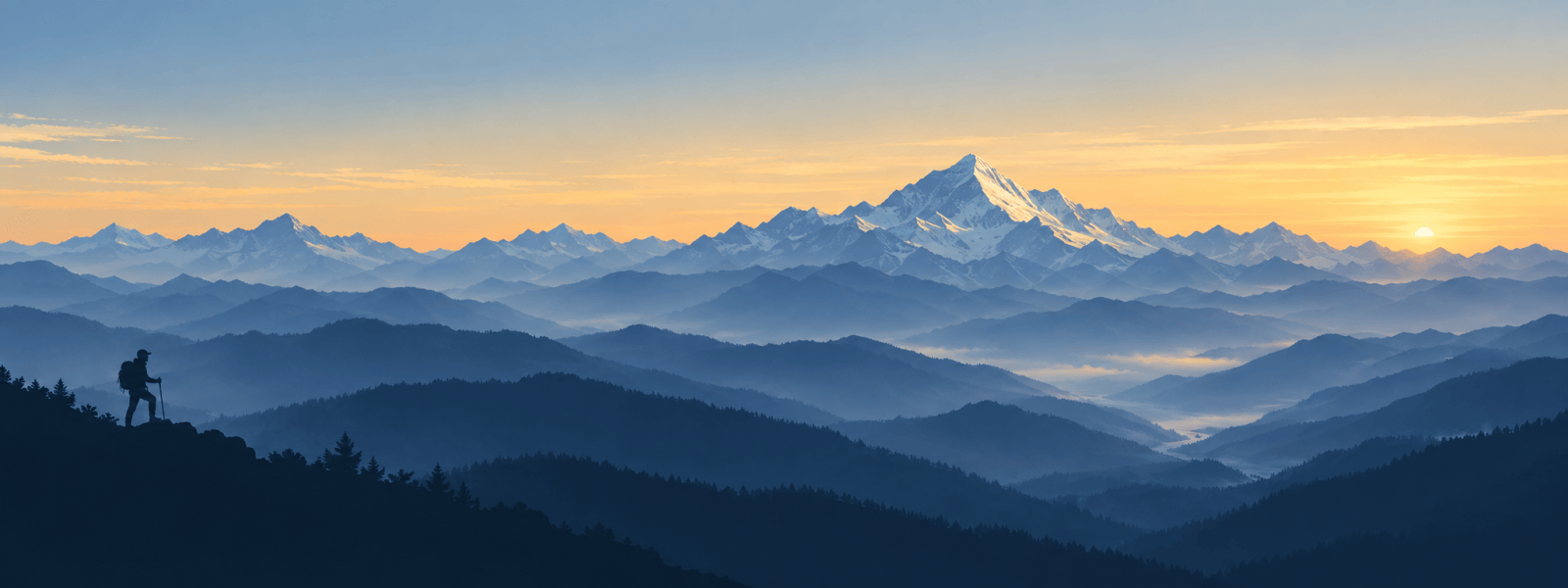
Winter in the Himalaya is cold, clear and quiet. If you do not mind cold nights, it can be one of the most beautiful times to walk. But not every trek is a good idea.
What winter is like
- Clear skies most days, with the sharpest mountain views of the year.
- Cold nights. At around 5,000 metres, nights in December and January are commonly between minus 15 and minus 20 °C, while sunny days can reach a few degrees above freezing. Lower down it is much milder.
- Short days. It gets dark early, so start early and arrive early.
- Few trekkers, and lodges with time to talk. Some higher lodges close for the coldest weeks.
- Snowfall can come at any time and block high passes for days.
Good winter walks
- Lower and middle-height treks: Ghorepani and Poon Hill, the lower Langtang valley, Mardi Himal’s lower part, day walks around the Kathmandu Valley.
- Everest Base Camp is possible for well-equipped walkers: the views are excellent and the trail is quiet, but the nights at Lobuche and Gorak Shep are very cold.
Be careful with
- High passes such as Thorong La on the Annapurna Circuit, the three passes of the Everest region and Larke La on the Manaslu Circuit. Snow can close them, and crossing in deep snow is dangerous. Plan another way out, and be ready to turn back.
- Remote valleys where most lodges close for winter.
What to bring
- A warm down jacket and a sleeping bag good for at least minus 15 °C.
- Warm hat, gloves and a thin inner pair, thermal layers.
- Microspikes for icy trails in the morning.
- Sunglasses and sun cream: the sun on snow is strong.
- A water bottle you can sleep with: water left out freezes.
Winter suits walkers who are happy with simple rooms, early nights by the stove and a slow pace. Keep a spare day or two for snow.
Was this page helpful?
Thank you — that helps me improve this page.
Rules change. If something here is out of date, please tell me and I will correct it.Tell me