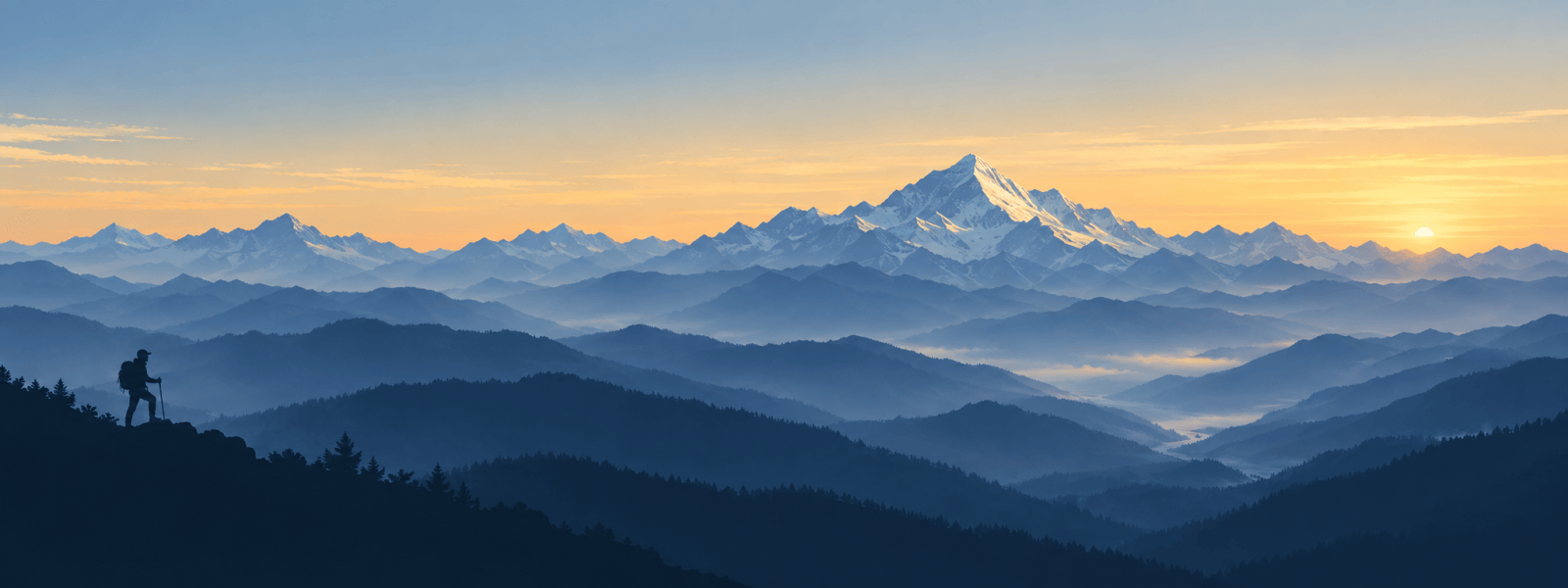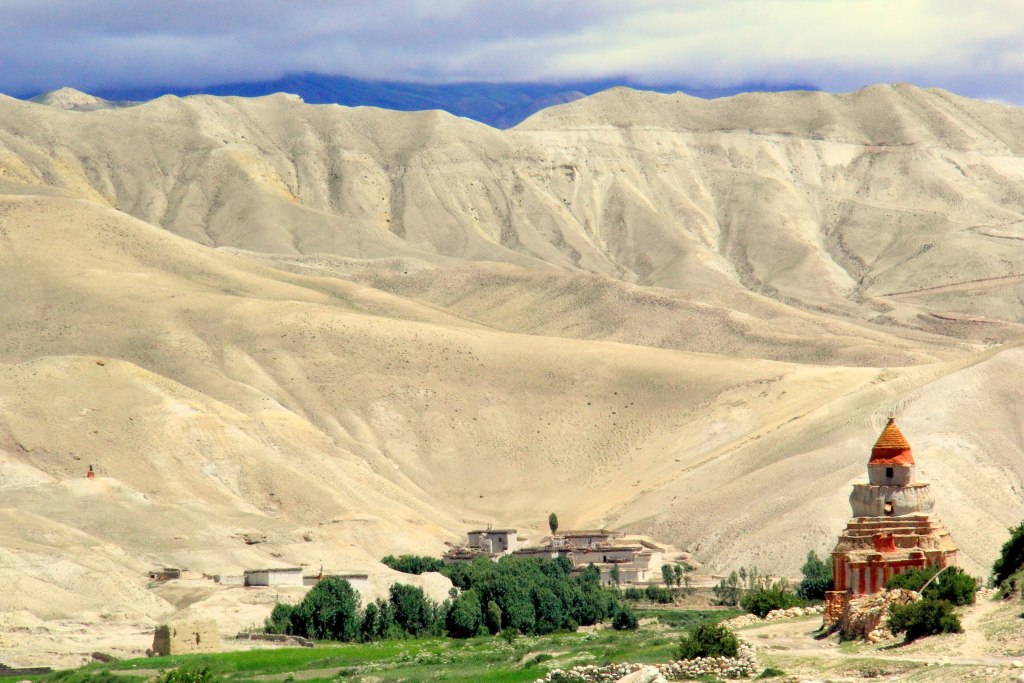
Of all the places I walk in Nepal, Upper Mustang is the one I love most. Behind the Himalaya, the green hills disappear. The land turns dry, wide and coloured: red cliffs, grey and gold earth, white villages and red monasteries under a sky so blue it looks painted.
It is the Tibetan plateau, and you can walk it freely here in Nepal. I’m Rujan, a licensed trekking guide in Nepal since 2018. This is my honest guide to the old Kingdom of Lo.
What Upper Mustang is
Upper Mustang is the northern part of Mustang district, between the Annapurna and Dhaulagiri ranges and the Tibetan border. For centuries it was the small Kingdom of Lo, with its walled capital, Lo Manthang. It was closed to foreign visitors until 1992, and it is still a restricted area today.
The people are close to Tibet in language, faith and way of life. You walk past long mani walls, chortens painted red, white and grey, cave dwellings cut into the cliffs, and monasteries with old wall paintings.
Why it is different from other treks
- It is a rain-shadow walk. The Himalaya stops most of the monsoon clouds. When it rains hard in Kathmandu and Pokhara, Upper Mustang is often dry. It is one of the few treks that work well in summer.
- The mountains are not the main show. You see Nilgiri and the Annapurna and Dhaulagiri peaks on the way in. After that, the landscape itself is the beauty: canyons, cliffs and the open plateau.
- It is not a high-altitude trek. Lo Manthang is at about 3,800 m, and the passes on the way are around 4,000 m. It’s high enough to need care, but much lower than the Everest or Manaslu passes.
- It is quiet. The permit cost keeps the numbers low. Even in the busy months, you share the trail with few people.
The permit (honest numbers)
Upper Mustang needs a Restricted Area Permit:
- USD 50 per person per day inside the restricted area, from Kagbeni (since December 2025)
- You pay only for the days you spend inside the restricted area
You also need the Annapurna Conservation Area permit.
The rules for restricted areas:
- At least two trekkers in the group.
- A licensed guide with you.
- The permit is applied for through a registered trekking company.
I process permits through a registered company on agreement and walk with you as your guide. You pay the permit at cost, with nothing added.
Fees can change, so I confirm the current figure before you book. My full guide to Nepal trekking permits explains the rest, and the mandatory guide rule explains why a guide is required.
The road, honestly
A dirt road now reaches Lo Manthang, and jeeps and motorbikes use it. On some days the walk follows the road, with dust and the odd vehicle. People sometimes feel disappointed when they hear this.
The good news is that there are still old footpaths, and the valley has two sides. A guide who knows the area takes you on the quieter trails between villages, away from the road, and walks back down a different side of the valley from the way up. The road also makes it easier to shorten the trip if someone feels unwell or the weather changes.
The way, in short
Most walkers fly or drive from Pokhara to Jomsom, then walk up the Kali Gandaki valley to Kagbeni, where the restricted area begins. A typical route:
- Kagbeni → Chele → Syangboche: canyons, the first passes, wind in the afternoon.
- Ghami: one of the longest mani walls in Nepal.
- Dhakmar: red cliffs, said in local legend to be coloured by the blood of a demon.
- Lo Gekar (Ghar Gompa): one of the oldest monasteries in the region.
- Lo Manthang: the walled city, with at least two nights here.
- Back down the other side: cave villages and monasteries, then Jomsom.
A comfortable Upper Mustang trek takes about 12 to 16 days from Kathmandu, depending on how many days you give Lo Manthang and the side trips.
In and around Lo Manthang
Give it time. This is the heart of the trip.
- The walled town: narrow lanes, houses joined wall to wall, and the old royal palace in the middle.
- The monasteries: Jampa and Thubchen, with wall paintings centuries old, and the monastery school at Chode.
- Chhoser: a day trip north, with cave dwellings high in the cliffs, some open to visit.
- The plateau views: open land toward Tibet, with long light in the evening.
When to go
| Months | What it is like |
|---|---|
| March to May | Clear, fresh, sometimes windy. Spring is lovely. |
| May | The Tiji festival in Lo Manthang, with masked dances over three days. The date follows the Tibetan calendar, so check it each year. |
| June to September | The rain shadow at its best. Green fields of barley and buckwheat among dry hills, while the rest of Nepal is wet. Flights to Jomsom can be delayed by cloud. |
| October to November | Very clear, golden fields after harvest, cold nights. |
| December to February | Very cold. Many lodges close, and many families move down to warmer places. Not the time to go. |
More on seasons: the best time to trek in Nepal.
Who this walk is for
- For you if: you love culture, quiet, landscapes and old monasteries as much as mountains; you want a summer trek; you like slow days with time to sit in a village.
- Maybe not for you if: snow peaks close up are the main reason you trek; the permit cost doesn’t feel worth it to you; or you dislike wind and dust.
Honest tips
- Wind: from late morning, a strong wind blows up the Kali Gandaki valley. Start early, and bring sunglasses and a buff for the dust.
- Sun: the sun at 3,800 m is strong even when it is cold. Use sun cream, a hat and lip balm.
- Water: carry a filter or purification tablets. Plastic bottles are hard to take out of a place this remote.
- Lodges: simple family teahouses, mostly comfortable. Rooms get cold at night, so bring a good sleeping bag outside summer.
- Respect: walk around mani walls and chortens on the left side, keeping them on your right. Ask before photographing people or inside monasteries. Some do not allow photographs.
- Slow down in Lo Manthang: two nights are the minimum. Three are better.
Frequently Asked Questions
Is the Upper Mustang trek difficult?
It is moderate. The days are 5 to 7 hours on dry, sometimes dusty trails, with a few passes around 4,000 m. Wind and sun tire you more than the climbing does. If you walk regularly at home, you can do it.
Can I trek Upper Mustang alone?
No. It is a restricted area: you need a licensed guide and a permit through a registered trekking company; since March 2026 one trekker alone can get it.
Why is the permit so expensive?
It is the government fee for a restricted area, partly to protect a fragile culture and land from too many visitors. It is also why the trail is so quiet.
Can I trek in the monsoon?
Yes. This is one of the best treks for June to August, because it lies in the rain shadow. The only problem is the way in: flights to Jomsom and the road can be delayed by weather lower down.
Is there a road now?
Yes, to Lo Manthang. You can still walk most of the way on footpaths and quieter routes, away from the road.
If Upper Mustang is calling you, write to me. Tell me your dates and how you like to walk, and I’ll tell you honestly how many days you need.
Rules change. If something here is out of date, please tell me and I will correct it.Tell me