Eight days from Syabrubesi to Kyanjin Gompa and Tserko Ri. A Kathmandu guide on Langtang's forests, Tamang villages, yak cheese, and a valley that rebuilt itself after 2015.
Langtang Valley: The Trek I Recommend When You Only Have a Week
When someone writes to me saying they have only ten days in Nepal and want to see real mountains, they usually expect me to say Poon Hill. Most of the time I say Langtang.
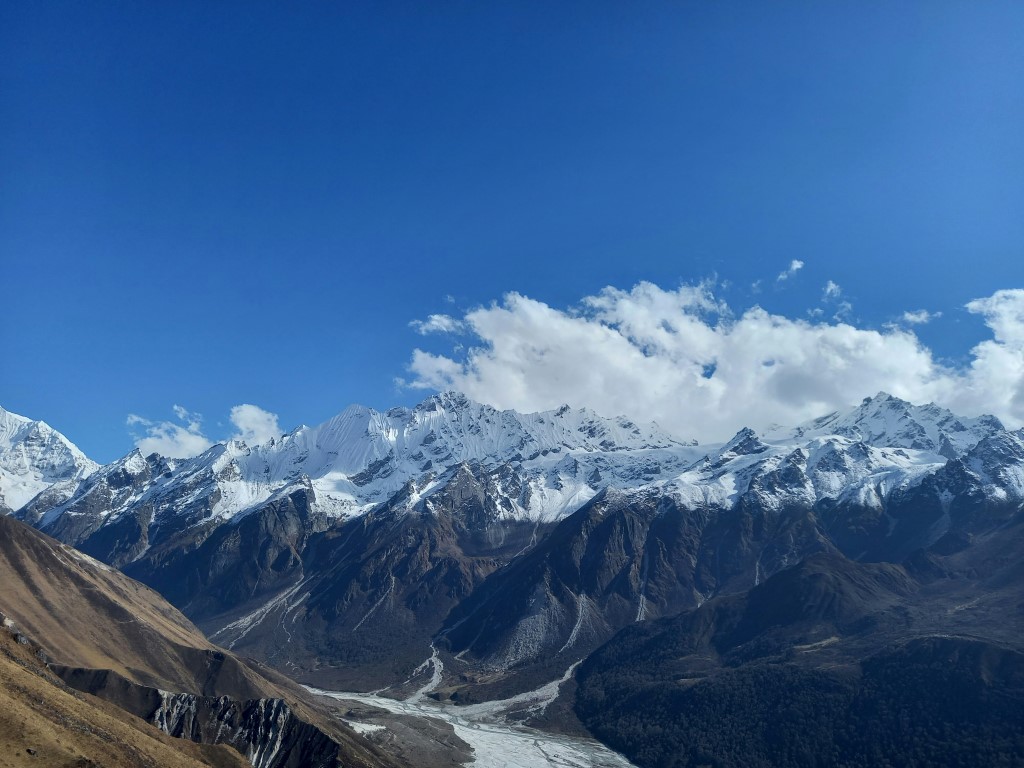
People are often surprised. Langtang doesn’t have the fame of Everest or Annapurna. But it’s close to Kathmandu, it doesn’t depend on a Lukla flight, and within four days of walking you’re standing in a wide glacier valley under a 7,000-meter peak. For a short trip, I don’t know a better deal in Nepal.
Getting there (the only hard part)
You leave Kathmandu early in the morning by jeep or bus and drive north to Syabrubesi. I won’t lie to you: the road is long and bumpy. It takes seven or eight hours, depending on the road condition and how many tea stops the driver needs. Bring snacks, download some music, and don’t wear white.
Once you reach Syabrubesi, the hard part is over. Dal bhat, the sound of the river, an early night.
Two days in the forest
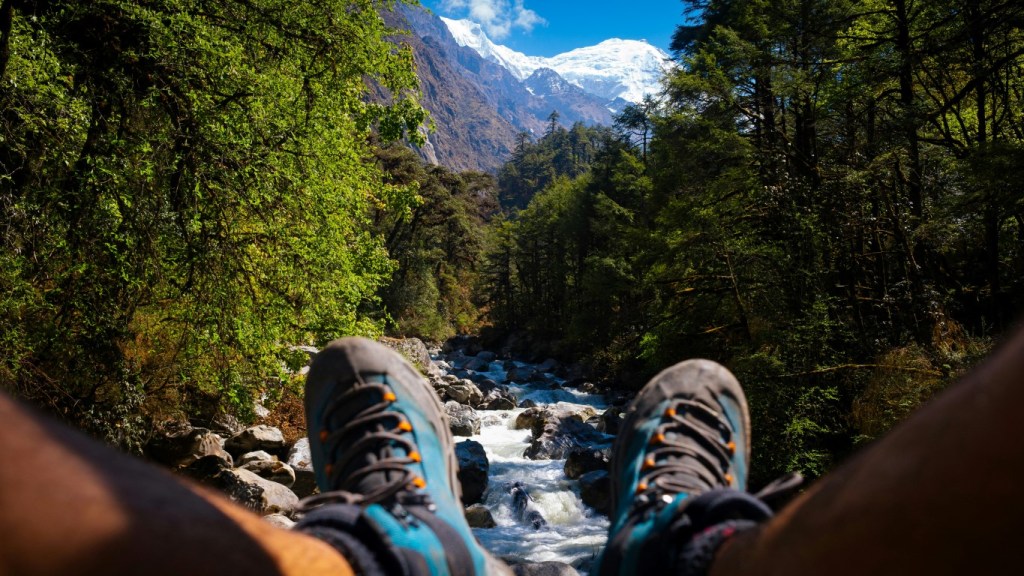
The first part of the trek follows the Langtang Khola upstream through thick forest. Oak and rhododendron lower down, bamboo higher up, and the river roaring beside you almost the whole way. It’s so loud that you end up talking with raised voices without noticing.
Keep looking up. Grey langur monkeys often sit in the trees around Bamboo and Rimche. This forest is also home to the red panda. I’ll be honest, seeing one is rare, and I would never promise it. But every time we walk this stretch, I find myself scanning the upper branches anyway. You never know.
The first night is usually at Lama Hotel. Don’t let the name fool you. It’s not a hotel, just a small group of teahouses in a clearing in the forest. It gets cold here once the sun drops behind the ridge, so keep your down jacket near the top of your bag.
Where the valley opens
This is my favourite moment of the whole trek.
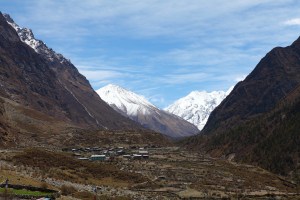
Somewhere around Ghoda Tabela the trees start to thin, the trail climbs a little, and suddenly the valley opens up wide in front of you. It’s a classic U-shaped glacial valley, and at the end of it, Langtang Lirung (7,227m) comes into view. After two days in the forest, it feels like someone opened a door.
I always walk a little behind my group here, just to watch their faces.
Langtang village and 2015
I can’t write about Langtang without writing about April 2015.
The earthquake that year set off a massive avalanche and landslide that buried the old Langtang village almost completely. A few hundred people lost their lives: villagers, porters, guides and trekkers. When you walk through today, you pass the place where the old village stood, and there is a memorial for those who died.
The new village has been rebuilt nearby. Many of the families who run the teahouses lost relatives in the disaster. They chose to stay, rebuild, and open their doors to trekkers again. I tell every group the same thing: the best way to support this valley is simply to come. Sleep in their lodges, eat their food, buy a cup of tea. And please be quiet and respectful around the memorial, and ask before taking photographs there.
It’s a heavy part of the walk. It’s also, in its own way, one of the most hopeful places I know.
Kyanjin Gompa

The last village is Kyanjin Gompa (3,870m), with its small monastery, stone walls, and yaks wandering around like they own the place (they do).
Kyanjin is famous for its cheese. There’s an old cheese factory here, started decades ago with Swiss help, and yak cheese with Tibetan bread is almost a rule. You’ll also find better coffee and bakery items than you’d expect this high. After a few days of walking, it feels like luxury.
We spend two nights here, and this is where the altitude starts to matter. It’s not extreme, but 3,870m is real altitude, so we take it slowly, drink a lot of water, and don’t rush up the hills on the first afternoon.
Tserko Ri at sunrise
For most trekkers, the high point of the trip is literally the high point: Tserko Ri (4,984m).
We leave in the dark, usually around four in the morning, with headlamps and cold fingers. It’s a steady, long climb of three to four hours. Near the top, the prayer flags start snapping in the wind and the sun comes up over the peaks around you: Langtang Lirung right in front, a line of snow mountains all around, some of them on the Tibetan side of the border.
If Tserko Ri is too much for you, Kyanjin Ri is a shorter climb with a wonderful view of its own. There’s no shame in choosing it. The mountains look just as good.
For the photographers: the best light on Langtang Lirung is early morning from Kyanjin itself, when the sun hits the summit first and the village is still in shadow. Set your alarm even on the rest day. You won’t regret it.
The walk back
We return the same way, down through the valley and the forest to Syabrubesi, then take the drive back to Kathmandu. Walking out on the same trail sounds boring, but it isn’t. Everything looks different going downhill, and you notice things you missed on the way up because you were too busy breathing.
A simple outline
Day 1 · Kathmandu (1,400 m) → Syabrubesi (1,460 m)
Drive · approx. 120 km · 7–8 hrs
Day 2 · Syabrubesi (1,460 m) → Lama Hotel (2,470 m)
approx. 11 km · ↑ 1,100 m ↓ 100 m · 6–7 hrs
Day 3 · Lama Hotel (2,470 m) → Langtang Village (3,430 m)
approx. 14 km · ↑ 1,000 m · 6–7 hrs
Day 4 · Langtang Village (3,430 m) → Kyanjin Gompa (3,870 m)
approx. 7 km · ↑ 450 m · 3–4 hrs
Day 5 · Kyanjin Gompa (3,870 m) → Tserko Ri (4,984 m) → Kyanjin Gompa
approx. 11 km return · ↑↓ 1,120 m · 7–8 hrs · start 04:00
Day 6 · Kyanjin Gompa (3,870 m) → Lama Hotel (2,470 m)
approx. 21 km · ↓ 1,400 m · 6–7 hrs
Day 7 · Lama Hotel (2,470 m) → Syabrubesi (1,460 m)
approx. 11 km · ↓ 1,100 m · 4–5 hrs
Day 8 · Syabrubesi (1,460 m) → Kathmandu (1,400 m)
Drive · approx. 120 km · 7–8 hrs
We can easily add a day for a slower pace, or extend the trip to the lakes at Gosaikunda for a longer route.
Who is it for?
If you’re reasonably fit and have never trekked in the Himalaya before, Langtang is a wonderful first trek. The walking days are five to six hours, the altitude builds gradually, and the teahouses are simple but friendly. If you’ve already done Everest or Annapurna, you’ll enjoy how much quieter it is.

The best seasons are October to November, for clear skies and sharp mountain views, and March to May, when the rhododendron forests in the lower valley turn red and pink. Permits for Langtang National Park are something I arrange for you before we leave Kathmandu.
Come and see it
Langtang is close enough to Kathmandu that you can be in the mountains the same week you land, and quiet enough that you’ll still feel like you’ve found something. You can see the full Langtang Valley trek here, plan it with the trip builder, or just email me at rujanneupane@gmail.com with your dates.
See you on the trail.
— Rujan